
The United Nations Decade of Family Farming 2019–2028 (UNDFF) was unanimously proclaimed by the United Nations General Assembly (A/RES/72/239), following an intensive campaign led by the World Rural Forum and family farming organisations from every continent, in collaboration with international agencies, governments and various organisations and associations.
The WRF is deeply involved in the implementation of the Decade (through its active participation in the UNDFF Steering Committee) and collaborates with the FAO-IFAD Joint Secretariat of the UNDFF, governments and international organisations, amongst others.
It provides a concrete framework for promoting joint work between governments, civil society – particularly family farming organisations – and international organisations in support of differentiated policies for family farming.
The WRF’s advocacy work is structured around the pillars of the UNDFF.
The WRF promotes forums for political dialogue between family farming organisations, governments, international organisations and other key stakeholders, driving forward tailored and innovative public policies for family farming.
To this end, it supports and strengthens the role of the National Family Farming Committees (NCFF) as key platforms for political dialogue. Through these forums, it drives the implementation of the UNDFF at national level, translating the needs and priorities identified by the various stakeholders into concrete actions, public policies and processes of change that improve the living conditions of family farmers.
The WRF, together with the NCFFs, has achieved significant progress in the development of regulatory frameworks in support of family farming in more than 45 countries, through the drafting of National and Regional Action Plans for the UNDFF and other policies in support of family farming.
More information: www.familyfarmingcampaign.org
Women play an indispensable role in family farming and the promotion of sustainable food systems. The WRF promotes their leadership and visibility both within organisations and in the formulation of public policy, with the aim of fostering structural changes that recognise this essential role.
To this end, the WRF strengthens the International Network of Rural Women in Action, which is made up of women leaders from regional and national family farming organisations who come together to share experiences, progress and strategies in the fight for women’s rights across all continents. We develop training programmes to enhance their advocacy skills and build evidence-based narratives on their situation and contribution to the sector.
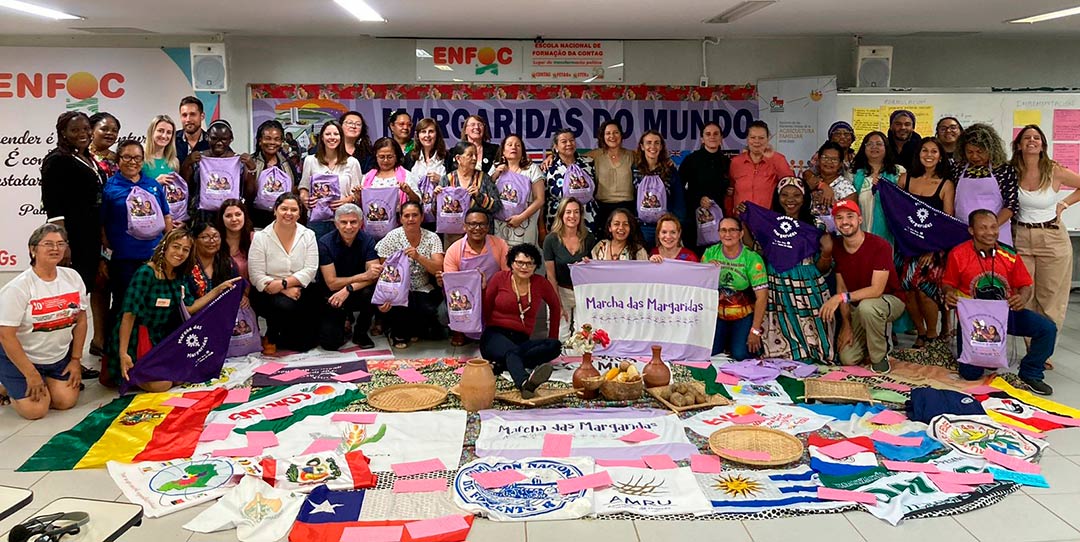
2nd International Meeting of the World Rural Forum’s International Network of Rural Women in Action, Brasília
The WRF works to ensure that young people in the sector are recognised as key players in the sustainability of the model and in the design of the policies that affect them. Strengthening their organisation and training is key to securing the present and future of family farming.
Through the Family Farming Youth Core Group, the WRF encourages their participation in various forums for international policy dialogue, promoting their recognition and giving a voice to their demands. Furthermore, it develops evidence-based narratives that highlight their role and the challenges of generational renewal in the countryside.
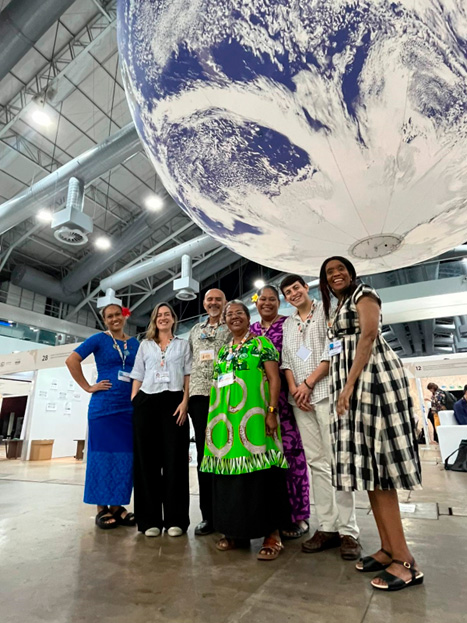
Family farming is an essential driver in building sustainable and resilient food systems for people and the planet, and is a key component of global climate action. The WRF works to ensure that family farming organisations occupy a central place in global climate and environmental governance, contributing their voice and expertise to the development of fairer and more effective policies.
- It actively participates in the main international forums on climate action to raise awareness of the catalytic role of family farmers in climate action, the transformation of food systems, the protection of biodiversity and the agroecological transition.
- It promotes joint positions among the organisations in our network and develops a solid technical foundation linking family farming to the three Rio Conventions.
- It supports partner organisations in accessing climate finance mechanisms.

The nature and strength of the World Rural Forum lie in its broad, diverse and inclusive network, comprising global, regional, national and local family farming organisations, rural development organisations, cooperatives and agricultural research centres in Africa, the Americas, Asia, Europe and Oceania.
It is of great importance to the WRF to strengthen the organisational, negotiation, advocacy, coordination and governance capacities of its member organisations and partners. To this end:
- It promotes capacity building and learning through various training programmes.
- It runs a two-way exchange programme designed to strengthen knowledge sharing within the network.
- It facilitates the coordination and participation of the network (particularly family farming organisations) in the various forums for dialogue and advocacy in which it is involved.